
Susanne Lohmann
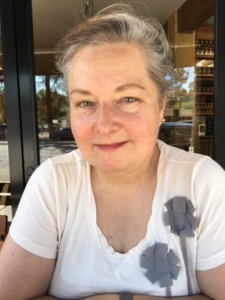
Susanne Lohmann
Professor of Political Science & Public Policy
Department Faculty
Office: 4343 Bunche Hall
Email: lohmann@ucla.edu
Phone: (310) 825-4331
Biography
Susanne Lohmann is Professor of Political Science and Public Policy at UCLA. She received her Ph.D. in economics and political economy from Carnegie Mellon University in 1991. She taught at Stanford University’s Graduate School of Business before joining UCLA in 1993.
Professor Lohmann is the Director of UCLA’s Jacob Marschak Interdisciplinary Colloquium on Mathematics in the Behavioral Sciences; member of the Board of the UC National Center for Free Speech and Civic Engagement; founding faculty member of the Interdepartmental Degree Program on Human Complex Systems; and former member of the National Academies Forum on Information Technology and Research Universities chaired by the University of Michigan’s president emeritus James Duderstadt.
Professor Lohmann was Fellow of the John Simon Guggenheim Memorial Foundation, Fellow of the Center for Advanced Study in the Behavioral Sciences, John M. Olin Fellow at the University of Southern California, James and Doris McNamara Fellow at Stanford University, Alfred P. Sloan Doctoral Dissertation Fellow at Carnegie Mellon University, and John M. Olin Doctoral Fellow, also at Carnegie Mellon University.
Professor Lohmann’s research cuts across three disciplines: political science, economics, and education. Her articles have appeared in the leading social science journals, including the American Political Science Review and the American Economic Review. Selected papers are listed below, with links. Professor Lohmann is Associate Editor of Economics of Governance.
Professor Lohmann has been recognized for her scholarship on German politics with an American Institute for Contemporary German Studies Non-Resident Fellowship and a Deutscher Akademischer Austausch Dienst Prize for Distinguished Scholarship in German Studies.
Professor Lohmann is the recipient of numerous teaching awards. In her online courses Diversity, Disagreement, and Democracy (PS 115D) and Ethics and Governance (PS 60) students are embedded in a massively multiplayer game of life consisting of 50-100 games of cooperation, competition, coordination, and collaboration. A recent offering of the Jury Selection and Jury Decision Making Game covered The People v. Daniel Penny. Students cycled through the positions of PROSECUTOR, DEFENSE ATTORNEY, and JUROR to select juries and issue juror verdicts.
Professor Lohmann’s seminars Radical Disagreement (PS 119B) and Global Catastrophic Risk: The Clash of Science, Ethics, and Politics (PS 122C) feature competitive debates on morally charged and politically controversial issues. A recent offering was devoted to the Israel-Palestine conflict. The first class session featured the history of Israel-Palestine from opposite perspectives, Israeli vs. Palestinian. The second canvassed International Relations schools of thought and their conflicting implications for solutions to the conflict. The third class session covered “the conflict over the conflict” on US campuses (protests, encampments) including, as it turned out, the concurrent violent blowup on UCLA’s campus.
Education
Diplom Volkswirtschaftslehre (M.S. Economics), University of Bonn, Germany, 1986.
Ph.D. Economics and Political Economy, Carnegie Mellon University, 1991.
Selected Publications
I. Central banking and political business cycles
“Optimal Commitment in Monetary Policy: Credibility versus Flexibility,” American Economic Review, Vol. 82, 1992: 273-286.
“Federalism and Central Bank Independence: The Politics of German Monetary Policy, 1957-1992,” World Politics, Vol. 50, 1998: 401-446.
“Rationalizing the Political Business Cycle: A Workhorse Model,” Economics and Politics, Vol. 10, 1998: 1-17.
II. Signaling models of collective action and information cascades
“A Signaling Model of Informative and Manipulative Political Action,” American Political Science Review, Vol. 88, 1993: 319-333.
“Information Aggregation Through Costly Political Action,” American Economic Review, Vol. 84, 1994: 518-530.
“Dynamics of Informational Cascades: The Monday Demonstrations in Leipzig, East Germany, 1989-1991,” World Politics, Vol. 47, 1994: 42-101.
“Bandwagon Effects, Information Cascades, and the Power in Numbers,” in The Oxford Handbook of Electoral Persuasion, eds. Liz Suhay, Bernie Grofman, and Alexander Trechsel, New York: Oxford University Press, 2019: 730-753.
Request paper
III. Special interest politics and informational lobbying
“An Information Rationale for the Power of Special Interests,” American Political Science Review, Vol. 92, 1998: 809-827.
“Information, Access and Contributions: A Signaling Model of Lobbying,” Public Choice, Vol. 85, 1995: 267-284.
“Informationelles Lobbying,” in Handbuch Lobbyismus, eds. Andreas Polk and Karsten Mause, Wiesbaden, Germany: Springer, 2022: 217-260.
Request paper
“Informational Lobbying,” in: The Political Economy of Lobbying, eds. Andreas Polk and Karsten Mause, New York: Springer. 2023: 103-142.
Request paper
IV. Regulation of Risk
“Fire-Alarm Signals and the Political Control of Regulatory Agencies,” with Hugo Hopenhayn, Journal of Law, Economics, and Organization, Vol. 12, 1996: 199-216.
“Delegation and the Regulation of Risk,” with Hugo Hopenhayn (Prof. Lohmann is first author), Games and Economic Behavior, Vol. 23, 1998: 222-246.
V. International relations
“Linkage Politics,” Journal of Conflict Resolution, Vol. 41, 1997: 38-67.
“Divided Government and U.S. Trade Policy,” with Sharyn O’Halloran, International Organization, Vol. 49, 1994: 595-632.
VI. Comparative politics (Germany)
“Party Identification, Retrospective Voting, and Moderating Elections in a Federal System: West Germany, 1961-1989,” with David W. Brady and Douglas Rivers (Susanne Lohmann is first author), Comparative Political Studies, Vol. 30, 1997: 420-449.
“Federalism and Central Bank Independence: The Politics of German Monetary Policy, 1957-1992,” World Politics, Vol. 50, 1998: 401-446.
“Dynamics of Informational Cascades: The Monday Demonstrations in Leipzig, East Germany, 1989-1991,” World Politics, Vol. 47, 1994: 42-101.
VII. Universities as complex adaptive systems
“Darwinian Medicine for the University,” in Governing Academia, ed. Ronald G. Ehrenberg, Cornell University Press, 2004, pp. 71-90.
“The Public Research University as a Complex Adaptive System,” Paper presented at the European Conference on Complex Systems September 25-29, 2006, in: Proceedings of the European Conference on Complex Systems, Complex Agent-Based Dynamic Networks Complexity Centre (CABDyN), University of Oxford, 2006: n.pag.
“Universitas Reformata Semper Reformanda: A Political Parallelogram of Continual University Reform,” in: Universities as Political Institutions, eds. Leasa Weimer and Terhi Nokkala, Leiden, The Netherlands: Brill. 2020: 138-164.
Request paper